
Routine service versus chemical wash
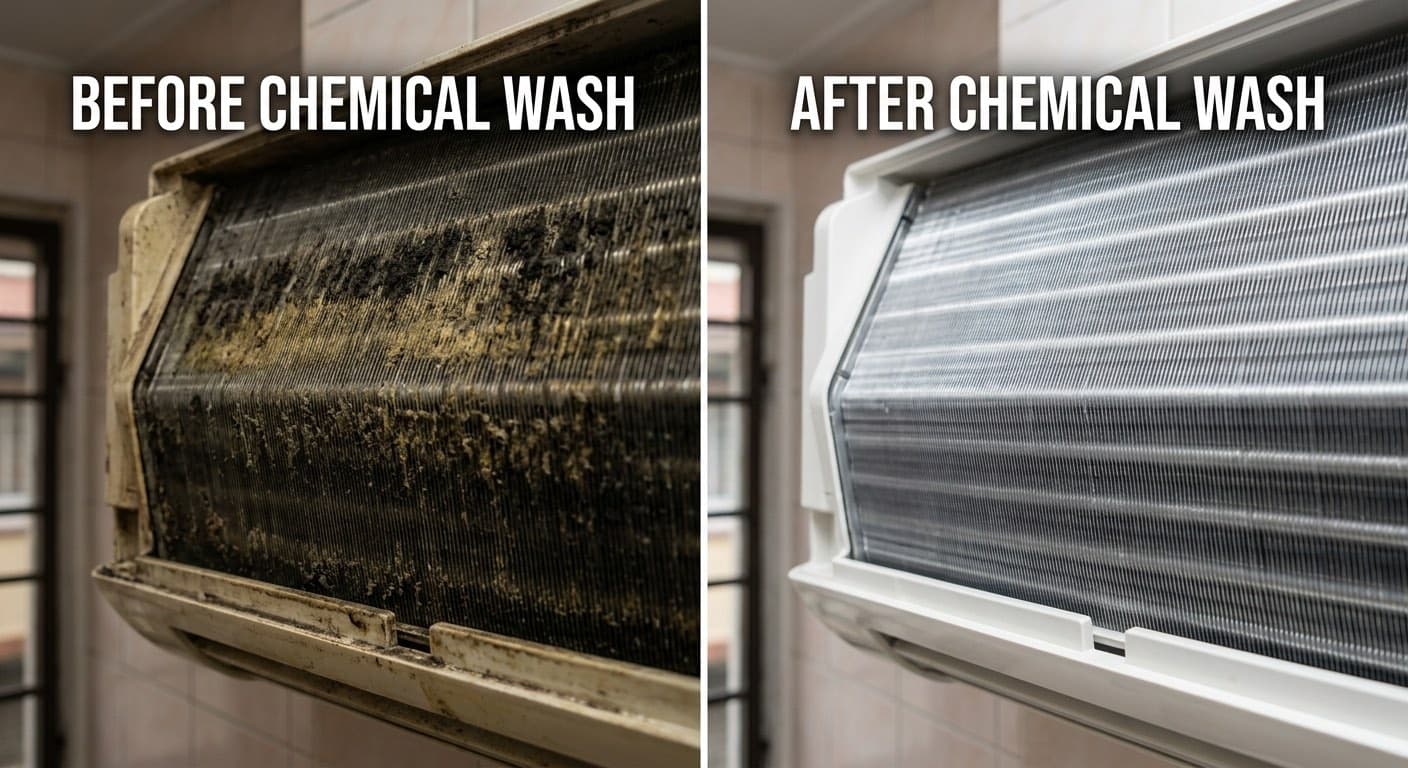
A routine service cleans the filters, rinses the coil surface and checks the drainage. It takes about forty minutes and suits a three to four month interval.
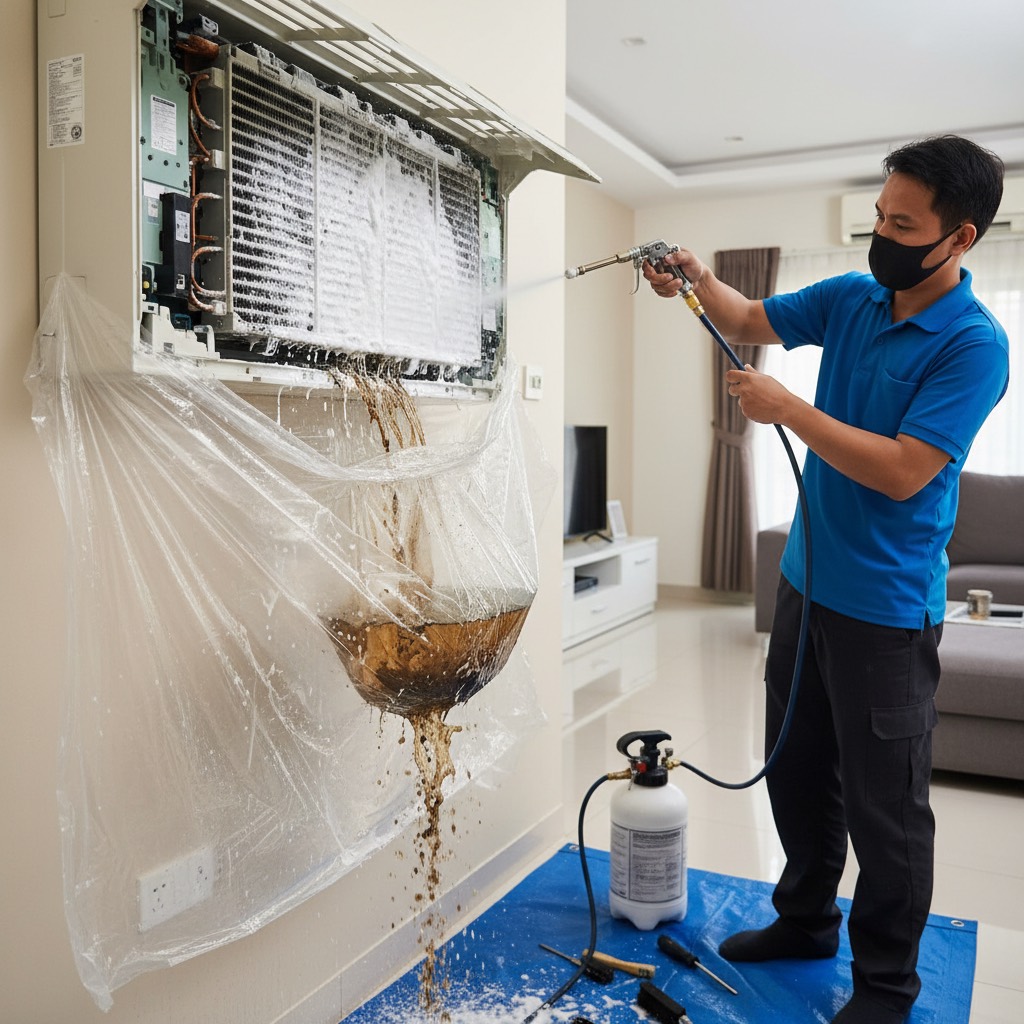
A chemical wash goes considerably deeper. The coil is treated with a dedicated solution that dissolves greasy dust and mould that plain water cannot shift.
Five signs your unit is due
The clearest sign is smell. A damp or faintly sour odour riding on the airflow means mould has taken hold on the coil or inside the drain line.
Gradually falling performance is the second. If the room takes twice as long to cool as it did last year, the coil is almost certainly coated.
- A damp or sour smell when the unit starts
- Airflow noticeably weaker than it used to be
- Water dripping from the indoor unit onto the floor
- A higher electricity bill with no change in usage
- Visible black dust on the louvres
How often it should be done
For ordinary household use, once a year is enough alongside routine servicing every three to four months.
If the unit runs all day, you live near a dusty road, or someone smokes indoors, shorten that to every six to eight months.
What it does to the electricity bill
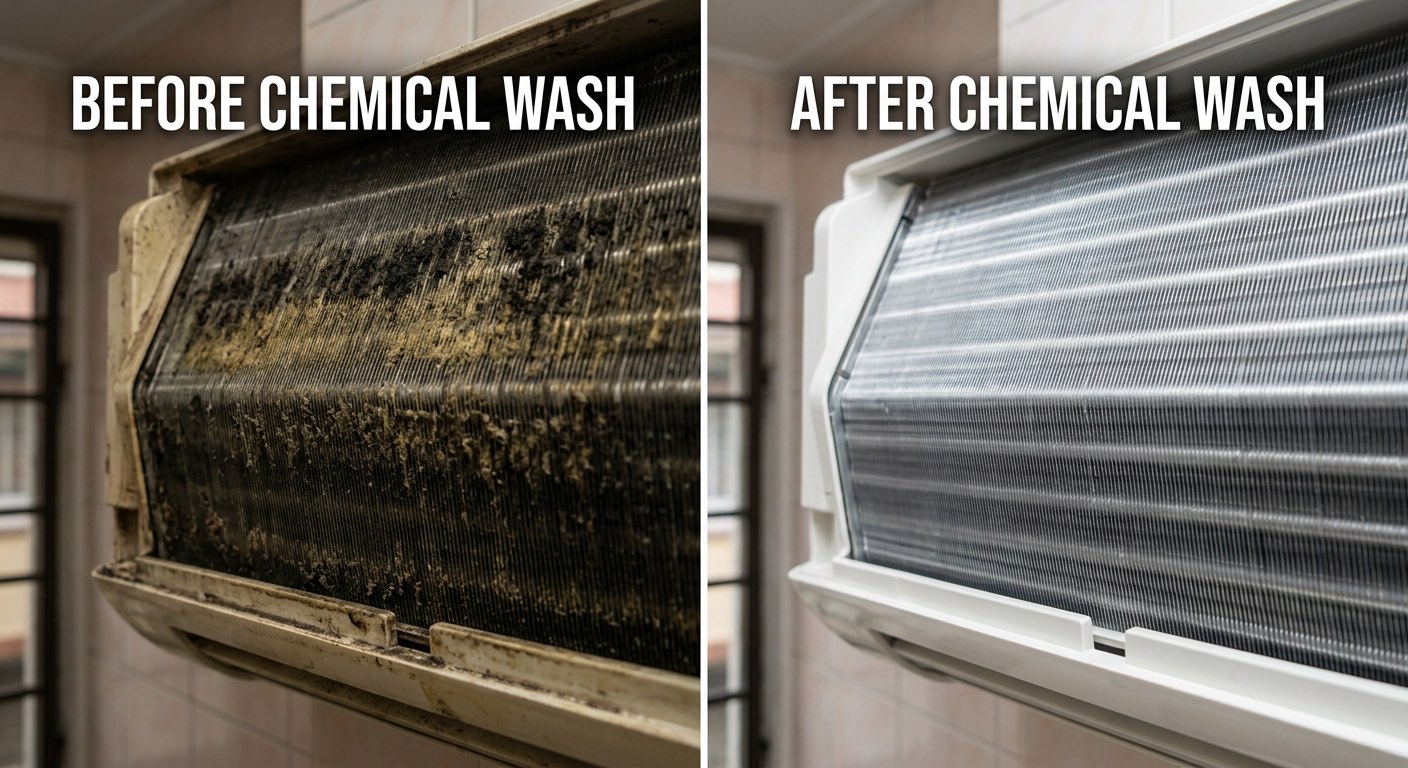
A clean coil transfers heat efficiently, so the compressor does not need to run as long to reach the same temperature.
Customers regularly report a clear drop in their bill after the first chemical wash on a long-neglected unit. The service often pays for itself within a few months.